

"This feeling won’t last forever."
A conversation with Jade Jurewicz of The Unexpecting Club.


I recently had the pleasure of chatting with Jade Jur, an Australian journalist whose Substack, The Unexpecting Club, captures the heartbreak, hope, and emotional complexity of infertility with incredible honesty. Read the interview below for Jade’s candid reflections on hope, control, and navigating the uncertainty of IVF.
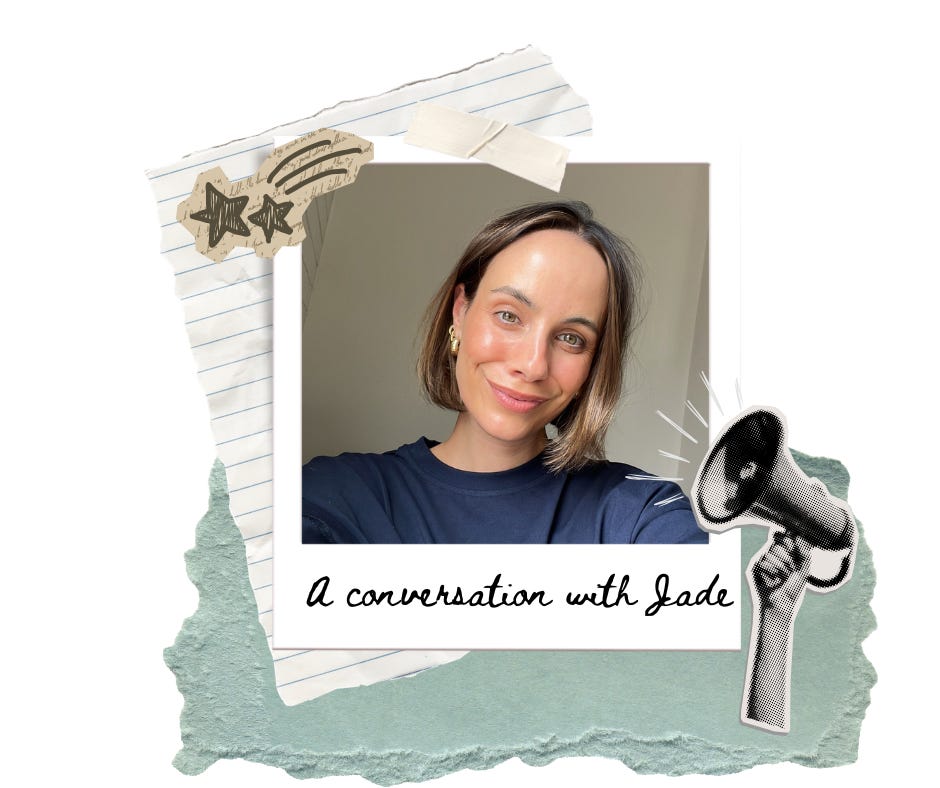
Jade is an Australian-based journalist of 15 years who loves long podcasts and short naps. She launched her Substack, The Unexpecting Club, in 2024 to share her big and small thoughts on the frustrations, confusion, sadness and strangeness of infertility and IVF. It’s a space she hopes helps others on the journey feel seen, find solace and occasionally, have a giggle.
Lexi: Your essay “Yes, I’ve tried it. All of it. Even that.” captures the emotional highs and lows of following every piece of fertility advice, from the expert to the woo-woo, and the way hope can feel both sustaining and painful. Looking back, how do you think this relentless pursuit of ‘what might work’ shaped your relationship with hope itself?
Jade: The concept of hope is something I’ve thought about a lot throughout this journey, and my interpretation of what it means to me continues to evolve.
Before starting IVF, I typically felt big emotions in isolation. For example I was excited when I got a job I really wanted, devastated during a messy break-up, scared if I heard a noise in the middle of the night, or annoyed when I realised it was the click clack of some furry with a long tail in the roof.
With an infertility diagnosis, and going through the emotional rollercoaster of not just IVF but all the add-ons I’ve chosen to do - from naturopathy, acupuncture, Chinese medicine, changing my diet, eliminating coffee and alcohol (mostly dairy, gluten and sugar - though everyone needs a good burger and piece of cake, especially those wading through this process!), manifesting, yoga, tarot cards, wearing a fertility bracelet that quickly snapped - I now feel a lot of dual emotions, particularly ones that furiously clash with hope.
Going into another cycle I often feel hopeful, but terrified at the same time. When I’ve tried a new add-on I feel hopeful, but also weary that it might not work or I’m wasting my money. When I see a pregnancy announcement from a friend I feel overjoyed for them, but deeply sad for myself.
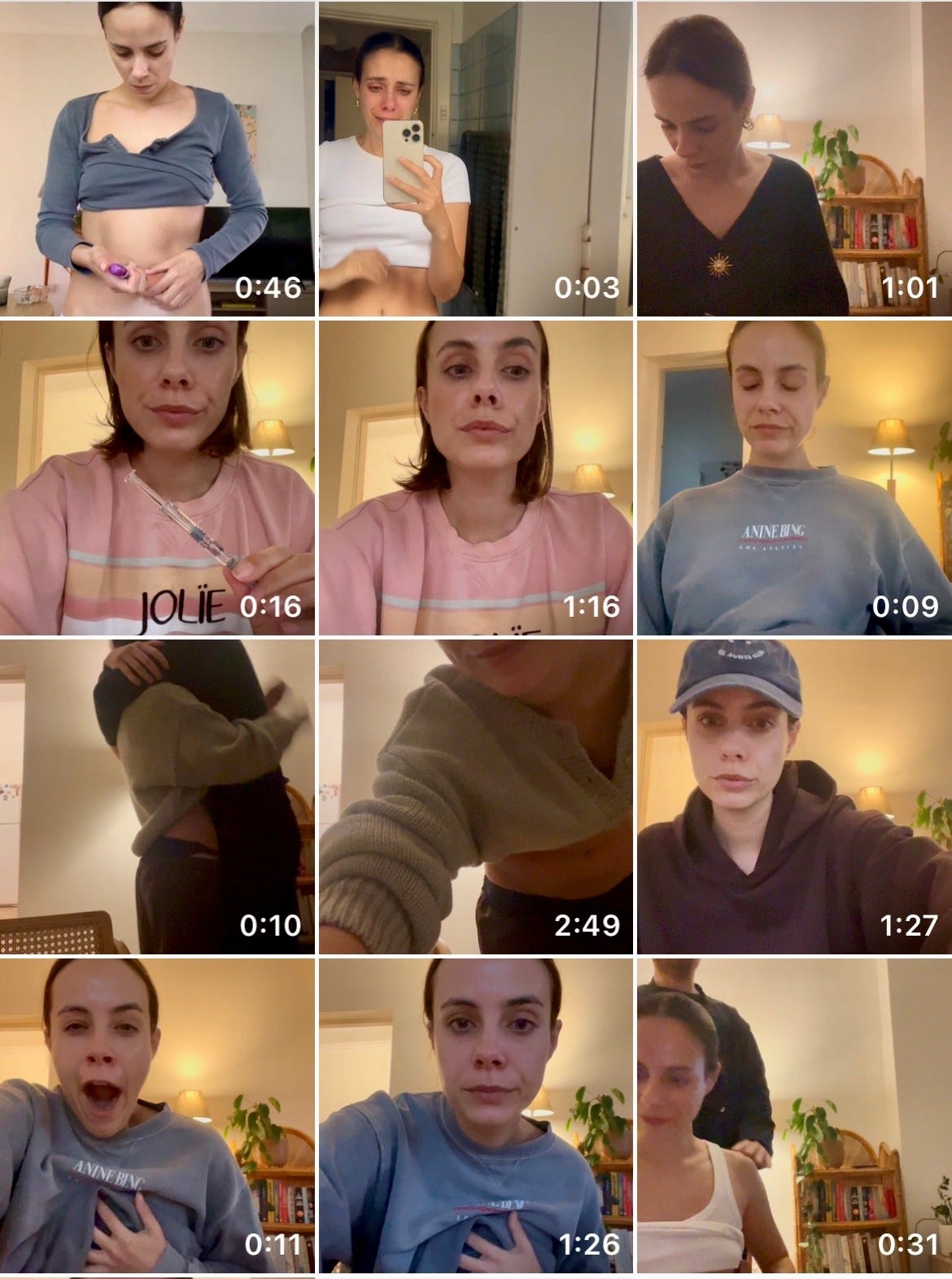
If hope started as a full cup of water - or wine, which I miss a lot - there are only a few sips left. But often when I follow fertility advice, the cup goes up a little as the illusion of hope reappears. Then it can dwindle when supplements aren’t making any difference, or my period comes after committing to a month of meditation and manifestation.
Reflecting on your question, it makes me realise that I haven’t yet lost my hope, though sometimes it can feel like a bit of a toxic relationship that I keep going back to despite it constantly letting me down. And yet, another recommendation will pop up that someone in a fertility forum suggested, and it comes creeping back in.
I’m currently in the middle of my fourth cycle, so no doubt my relationship with hope will continue to shape-shift. For now, it feels like something that is always there, but doesn’t shine as brightly as it once did.

Lexi: Your writing vividly captures the emotional, logistical, and societal pressures of trying to conceive later in life, from the endless appointments and needles to the quiet shame and envy that can arise. Looking back, how has navigating these pressures changed your understanding of what it means to be ‘in control’ of your body, your fertility, and your life?
Jade: I’ve always been someone who has worked hard for the things in life that I really wanted. In my twenties, I worked weekend and night shifts to get into journalism, often missing weddings or family events because I was at a crime scene or bush fire. In relationships, I’ve always encouraged couples counseling before a break-up to ensure we tried and talked about everything. When I wanted a specific bag, I saved for years to buy it.
For the things I’ve wanted, I’ve used everything in my control to get them - making sacrifices, tossing and turning during sleepless nights or having hard conversations.
So after wading through an infertility diagnosis for over three years, I’ve come to realise that my fertility isn’t something I can control - and believe me, I’ve tried. Might I have had more control over it if I’d chosen to start a family earlier, or perhaps frozen my eggs? Perhaps. But at that prime time I was getting over a 10-year relationship break-up, living alone for the first time and could barely pay my rent - my fertility was the last thing on my mind.
Because there is such a lack of control during the IVF process, I’ve tried to grasp it wherever I can - hence why I’ve tried to add so many extra things in the hope that I could regain it. But time and time again, I’m reminded that my fertility is largely at the whims of my specialist, my genetics and how my body reacts to the medications. No amount of hard work is going to change that in a major way.


What I can control, though, is the timings of IVF, and that can make a real difference when it comes to protecting my mental health. For example, I typically have at least a three-month break between cycles. I also had a laparoscopy where they found endometriosis, so I had time after that too. Those pauses allow me to restore some sense of normality.
During this time I almost completely put IVF out of my mind, knowing it will one day again be all-consuming, but that doesn’t have to be right now. Instead I put my energy back into friendships that may have taken the backburner when I was struggling to get through the days. I go on a holiday, have a dirty martini if I feel like it and just enjoy my life away from the trenches for a while.
I can also (somewhat) control my social media, which has always been something to help my brain tune out but can have the opposite effect when every second post feels like it’s a pregnancy announcement. The moment one pops up, I mute that person. At first I felt guilty about this, judging myself for not celebrating their joy. Now, I’ve learnt that only I can work to protect my peace and if a gentle mute will save the all too familiar stomach drop, then a mute it is!
Lexi: How do you make space for joy after trying everything to conceive?
Jade: I feel so very fortunate that I am surrounded by a lot of joy in my life and am still able to recognise that, even in my toughest moments.
Coming from a very close family with sisters and multiple nieces and nephews, sometimes it’s as simple as flicking through my phone and looking at pictures of them. I’m not sure what my sister says to my nieces, but often they’ll present me with hand-drawn pictures of us together with messages that tell me “you’re braver than you think” and that I’m “very enthusiastic about clothes.” These are among my most prized possessions.


Throughout the process I’ve had to learn to turn to other people when I need a moment of joy, asking my partner to say something he loves about me, or booking in a last-minute catch-up with a friend.
Joy can also be found in a walk while listening to my favourite podcast, allowing my brain to switch off. It can be ordering my favourite meal - I’m basic, it’s spaghetti bolognese - or splodging out on the couch and binging some Real Housewives iteration or The Pitt.
For me, joy is simply being able to be in the moment, for however long, and not think about conceiving or a failed cycle. Everyone’s thing will be different but I would encourage everyone to find them, and indulge in them as much as you need.
Lexi: If you could share one insight with a woman just starting this journey, what would it be about resilience or self-discovery?
Jade: I’d say to go into it without any expectations - on yourself, on your specialist or on others.
The best laid plans are not going to work out (they may be better, or worse). You might have to go through a few specialists before you find one you trust and click with and people around you are going to say some really kind, but also some extremely dumb things (oh, don’t stress and I’ll get pregnant, why did I think of that?).
I never really felt like my approach was very strong: I cried a lot, felt frustrated, cancelled social events, had sick days and stopped putting in 100 per cent into work and life in general. But what I’ve come to learn is that this is normal, expected and necessary.
One of the best things a psychologist said to me, when I was making excuses about being sad that day but working hard not to be because I know others have it worse, is that what I’m going through is unfair. It’s *enter expletive here*, and it’s okay to feel that way.
Resilience doesn’t look like going on with life, work, friendships and relationships like nothing is happening. It’s about knowing where to release some pressure or implement boundaries in order to make it through the day.
And knowing this feeling won’t last forever - but you’re allowed to feel down while you’re in it. So if you need to have a sick day, RSVP no to a baby shower or have takeaway instead of eating a nutritious meal you think will help your fertility - that is absolutely fine.
Jade’s reflections on infertility, hope, and resilience felt too important not to revisit. So I rounded up some of her most honest, comforting, and hard-earned advice:
You can hold two emotions at once: joy for others and sadness for yourself.
Protect your mental health by taking breaks between cycles when possible.
Mute social media accounts if they disrupt your peace.
Find joy in small, everyday moments that have nothing to do with fertility.
Lean on the people who make you feel safe, seen, and supported.
Resilience does not mean pretending everything is okay.
Crying, cancelling plans, and setting boundaries are normal parts of coping.
People will say both kind and insensitive things; neither defines your experience.
It’s okay to say no to baby showers, social events, or anything that feels too heavy.
Hope may change shape over time, but that doesn’t mean it’s gone.
If this interview resonated with you, I’d love to hear your thoughts. Your comments and shares don’t just support my writing, they create space for conversations that matter. Consider tapping the “❤️” or sharing this post with a friend.
 | A guest post by
|