

"I desperately needed a win."
A conversation with Carrie Hauskens of Blooming with Care about why the hardest stories are often the most important ones to tell.


I recently spoke with Carrie Hauskens, who writes about some of life’s hardest experiences, turning them into work that deeply resonates with others on similar paths. In our conversation, we explore what it means to share the “hardest parts,” how she decides what to say out loud, and why discomfort is often the signal that she’s often a sign she’s writing something true.
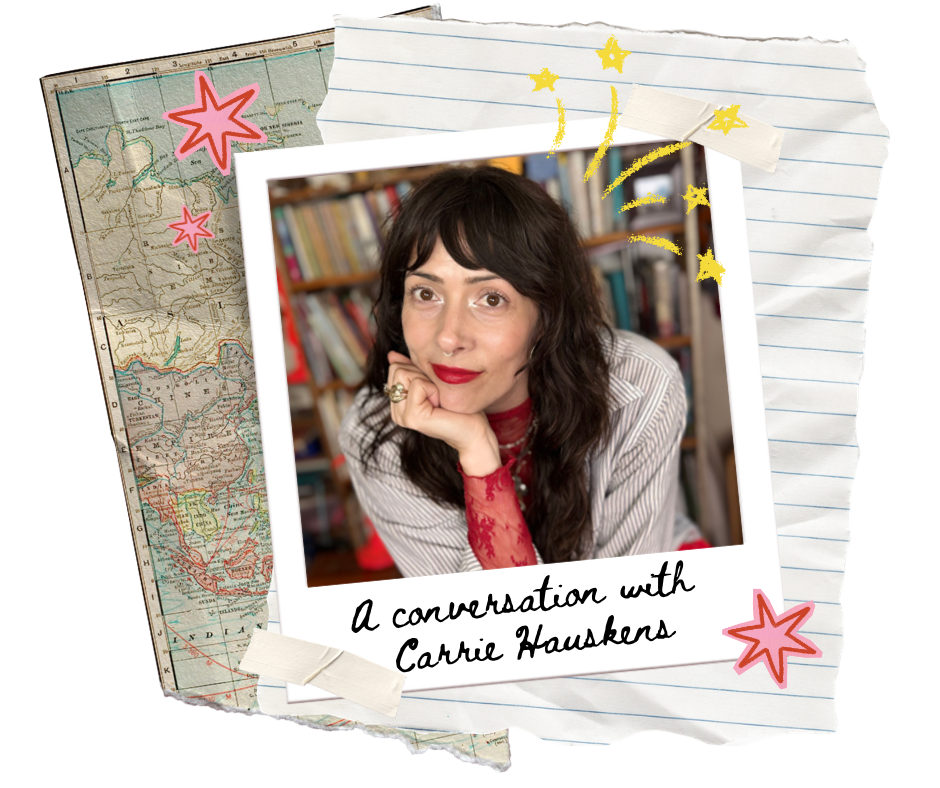
Carrie is a freelance writer based in Northern California, currently writing a memoir. Her expertise is in sharing how to embrace the childfree life after infertility and the many tangents that radiate from that experience. Her trademark is vulnerable, funny, and authentic writing. After eight years of trying to conceive, multiple miscarriages, working with surrogates, and delivering her stillborn daughter, she embodies all things grief and infertility based with a side of humor to cope.
Lexi: Your writing is deeply vulnerable and authentic. How do you decide what parts of your infertility journey to share, and how do you balance honesty with caring for yourself?
Carrie: I love to share the raw parts of life because I know many other understand it. There’s no way I’m the only one, you know? When I decide what to share and what not to, it all comes down to how it makes me feel. If it makes me feel scared or sick to my stomach, I know it’s the better thing to share because it’s more honest. The things that scare you are the things we should be writing. One of my favorite authors, Jedediah Jenkins, once asked something like, “What is something you think about a lot but don’t talk about. Whatever that is, you should write it.” I like sharing the real stuff. I’ve also had to learn to deal with the pushbacks of this, and that’s definitely not my favorite, but I also know that means it’s resonating.
Lexi: After years of trying to conceive and experiencing profound loss, you describe needing a “win” to feel grounded in your life. What did that process of reclaiming happiness look like?
Carrie: I desperately needed a win. I forgot what it felt like to work toward something and then have it work out. Our first big “win” while dealing with infertility was converting a school bus into an RV. The act of creating a large goal and following through on it was so simple and exactly what we needed. Specifically, creating something with our hands turned out to be a key element of the healing process. When we became the couple with the bus instead of the couple trying to get pregnant, I felt a shift in identity. And it felt so good, I knew I needed more!


Lexi: You’ve written about turning your nursery into a bright, full-of-life office as a way to reclaim space and purpose. How have these small, intentional changes helped you reframe loss and find magic in everyday life?
Carrie: Initially, when we decided to stop trying for kids, I assumed I had to have this huge life. Like I couldn’t live simply without children. Which, of course, is a wild thought, but also a normal one. And I quickly realized trying to fill the void with other big things wasn’t working. In reality, I was exhausted and decided to slow down and immediately was like–ohhh, this is it. Because once I slowed down and started to notice the small things, everything became magical. My office, the birds, the morning cup of coffee, it all started to feel like a beautiful life.
Lexi: Your background in education and social-emotional learning intersects with your infertility work. How has teaching influenced the way you support others through grief and help them process these experiences?
Carrie: I loved being a teacher. The kids taught me so much about life by simply being themselves. Asking questions is encouraged. We are different, but we are the same. And no one likes overhead lighting! In so much of my teacher training, I realized the tools were useful and worked great for adults, too. Embracing a growth mindset has easily been one of the greatest tools I’ve ever learned. I worked with kids who dealt with such a big loss and watched them adapt. And when I was hit with great loss, I approached many of the issues as they did: asking questions, making art, and allowing space for any and all emotions. We all learned from each other, and it genuinely changed my perspective on life.
Be sure to follow Carrie on social media and visit her website, Blooming With Care, for more of her writing, reflections, and insights on navigating infertility, grief, and life after loss.
Website: Blooming with Care
Substack: Carrie Hauskens
Instagram: @bloomingwithcare
 | A guest post by
|